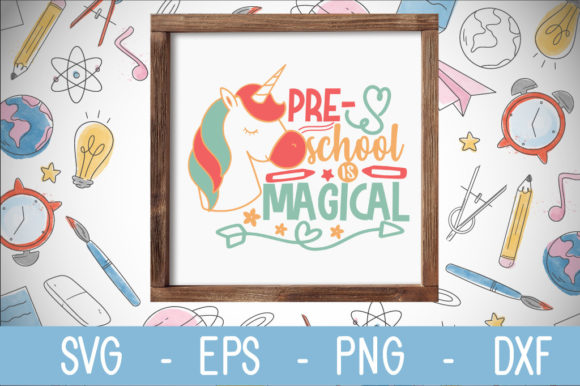
Pre-school is Magical SVG: A Designer's Review
As a professional embroidery designer and product reviewer, I approach every new digital asset with a specific question: will this design actually translate from screen to fabric without losing its charm? When evaluating the Pre-school is Magical SVG, my focus shifts immediately from the crisp vector lines on my monitor to the tactile reality of thread on textile. This graphic falls squarely into the Crafts and Graphics categories that drive sales for Etsy sellers and small shop owners, but its success in a real-world embroidery project depends entirely on how we interpret those clean digital lines into stitch data.
Capturing Whimsy Without Losing Structure
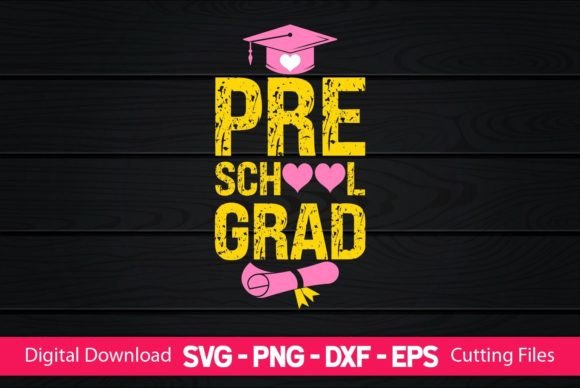
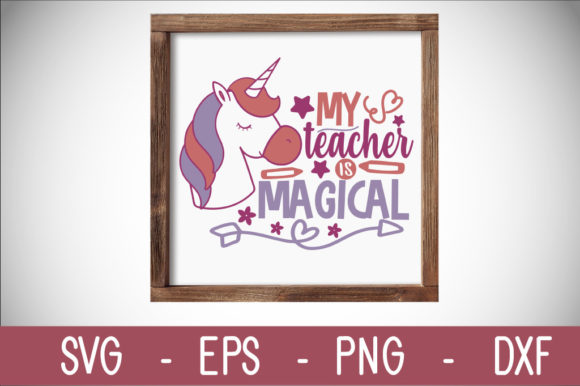
My first impression of Pre-school is Magical SVG is one of nostalgic warmth balanced with modern simplicity. The layout suggests a playful typography arrangement likely accompanied by subtle illustrative elements like stars, crayons, or building blocks. For a machine embroidery design, this aesthetic is gold. It avoids the cluttered complexity that often plagues novelty graphics, offering instead a clear visual hierarchy that reads well from a distance. When I look at this file, I don't just see a cute phrase; I see a potential best-seller for back-to-school season or a personalized gift for teachers and parents.
The mood is undeniably cheerful, but as a designer, I am analyzing the negative space. In embroidery, empty space is just as important as filled areas. This design appears to have adequate breathing room between letters and graphical accents, which is crucial when converting to an embroidery file. Tight kerning or overlapping elements in the source SVG can become a nightmare of jump stitches and registration issues once digitized. Fortunately, the open structure here suggests it was created with crafting versatility in mind, making it a strong candidate for both vinyl application and stitched interpretation.
Real-World Application: The Teacher Appreciation Tote
To truly judge this asset, I mentally placed it into a current client project: a custom canvas tote bag intended as a teacher appreciation gift. This is a classic use case where the Pre-school is Magical SVG needs to perform under specific constraints. Canvas is a textured, unforgiving fabric that demands confidence in your stabilizer choice and stitch density.
For this tote bag design, I envision using a combination of satin stitch borders for the text to give it a polished, boutique feel, paired with fill stitch accents for any accompanying icons. The "magical" aspect of the theme calls for high-contrast thread colors—perhaps a metallic gold or silver against navy or natural canvas—to elevate the perceived value of the handmade product. As an Etsy seller or craft business owner, you know that customers buy the emotion as much as the item. Seeing this design stitched out on a sturdy tote creates an immediate emotional connection that a plain printed bag simply cannot match. It transforms a functional object into a cherished keepsake.
Navigating Fabric Limitations and Hoop Sizes
While the design is versatile, practical experience dictates caution in certain applications. If you are planning sweatshirt embroidery on lightweight French terry or performance blends, the stitch density must be managed carefully. Heavy fill stitches on stretchy fabrics can cause puckering or distortion, ruining the garment. For Pre-school is Magical SVG, I would recommend testing a lighter density version or utilizing an applique design technique if the lettering is bold enough to support it. Appliqué reduces stitch count significantly and adds a beautiful textural element that fits the preschool aesthetic perfectly.
Hoop size is another critical consideration. While the provided files (SVG, PNG, EPS, DXF) are compatible with Cricut, Silhouette, Inkscape, and Adobe platforms for cutting and printing, embroidery machines require specific digitizing. Before purchasing or stitching, you must confirm the physical dimensions. If you intend to use this for baby embroidery on onesies or caps, ensure the design scales down legibly. Tiny serifs or intricate details in the original vector art may disappear or turn into thread nests at smaller sizes. For curved surfaces like caps, the design may need to be arched or simplified to prevent flagging and misalignment during production.
Elevating Brand Consistency and Product Value
In the competitive landscape of commercial embroidery and digital product sales, consistency builds trust. Using Pre-school is Magical SVG allows for cohesive branding across multiple product lines. Imagine offering a matching set: an embroidered patch for a backpack, a monogrammed apron for art class, and a coordinating pillow cover for the reading corner. When customers see a unified visual language, they perceive your shop as professional and intentional rather than scattered.
Furthermore, the quality of your finished product reflects directly on the design asset. A cleanly executed stitch-out of this graphic signals to buyers that you understand your craft. It enhances giftability because the recipient recognizes the care put into selecting a design that feels bespoke rather than generic. For creative entrepreneurs selling printable mockups or digital previews, the clean lines of the included PNG and EPS files make it easy to showcase potential colorways without needing to stitch every variation first, streamlining your listing creation process.
Essential Technical Notes for Makers
Before you load this design into your machine or list it in your shop, adhere to these professional best practices to ensure success:
- Verify Licensing and Formats: Remember that this purchase includes digital files only (SVG, PNG, EPS, DXF). These are vector and raster graphics, not pre-digitized embroidery files like .PES or .DST unless specified otherwise. You or your digitizer must convert this art into stitches. Always check the license terms to confirm you have commercial rights for selling finished embroidered products versus selling the digital file itself.
- Test on Scrap Fabric First: Never run a new design on a final product without a test stitch-out. Use a scrap of the exact fabric and stabilizer combination you plan to use for the final piece. Check for registration errors, thread breaks, or excessive density.
- Evaluate Thread Color Contrast: View the design in black and white before choosing colors. If the values are too similar, the design will vanish on the fabric. Ensure the "magical" elements pop against your chosen background.
- Assess Stabilizer Needs: For knit fabrics, use cut-away stabilizer to prevent stretching. For woven fabrics like denim or canvas, tear-away may suffice. The wrong stabilizer is the most common cause of poor results with otherwise excellent designs.
- Check Small Detail Legibility: If resizing for baby clothes or sleeves, inspect the smallest text elements. Text below 4mm height often requires specialized micro-fonts or simplification to stitch clearly.
- Mockup Realistically: When creating listings, use realistic shadows and fabric textures in your digital previews. Customers need to visualize how the flat SVG translates to a three-dimensional embroidered patch or apparel decoration.
Final Thoughts for the Creative Entrepreneur
Pre-school is Magical SVG represents more than just a cute saying; it is a foundational asset for seasonal inventory and personalized gifting. Its strength lies in its adaptability and emotional resonance. Whether you are creating custom apparel for a local school fundraiser, designing nursery decor, or expanding your Etsy shop’s back-to-school collection, this graphic offers a solid starting point. By approaching it with technical mindfulness and respecting the translation from pixel to stitch, you can create handmade products that truly capture the magic of early learning while maintaining the professional standards your customers expect.