Fourth Grade Teacher Messy Bun: A Stitch Review
First Impressions and Design Personality
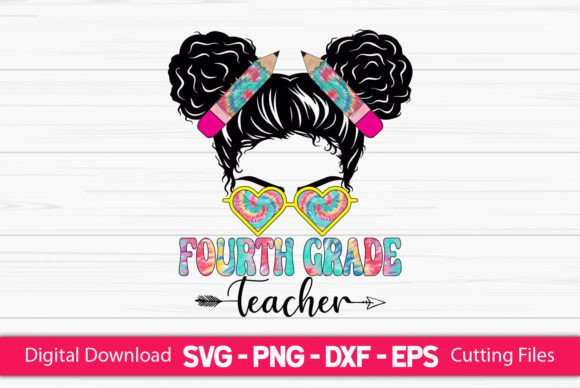
When evaluating the Fourth Grade Teacher Messy Bun for potential use in a commercial or personal embroidery project, my first assessment focuses on the visual hierarchy and emotional resonance. As a designer, I look for graphics that communicate instantly without requiring the viewer to squint at tiny details. This design captures a specific cultural moment in education apparel: the relatable, hardworking, yet stylish educator aesthetic. The messy bun motif serves as a universal symbol of organized chaos, making it an immediate conversation starter among teachers and parents alike.
The layout appears balanced for center-chest placement or tote bag branding. In the realm of Crafts and Graphics, this style bridges the gap between trendy social media aesthetics and practical school spirit wear. However, before loading this into my machine, I am analyzing the line weight and negative space. A successful machine embroidery design must translate vector art into thread without losing its charm. The "messy" aspect of the bun suggests organic lines, which can be tricky if the digitizing is too rigid. I am looking for fluid curves that mimic hair texture rather than blocky shapes that look like a helmet.
Real-World Application: The Custom Sweatshirt Test
To truly judge the viability of this file, I envision a real-life scenario: creating a custom crewneck sweatshirt for a fourth-grade teacher appreciation gift. Sweatshirts are a staple in custom apparel, but they present unique challenges due to fleece texture and stretch. When stitching the Fourth Grade Teacher Messy Bun on fleece, the primary concern is stitch definition. Fleece tends to swallow fine details, so I need to verify if this design utilizes adequate underlay or if it requires modification.
In this test case, I would treat this as a potential applique design if the file supports it, or a dense fill stitch if it is purely digital. If using applique, the messy bun shape offers excellent coverage for fabric scraps, adding tactile interest that customers love in a handmade product. For a direct stitch version, I am checking whether the satin stitch borders are wide enough to prevent fraying on the fuzzy surface. A successful sweatshirt embroidery project relies on contrast; I would pair a light-colored bun against a navy or charcoal garment to ensure the design pops in low-light classroom environments. This level of foresight separates professional results from amateur attempts.
Navigating Fabric Limitations and Hoop Constraints
Not every substrate is friendly to this specific aesthetic. While the Fourth Grade Teacher Messy Bun shines on stable cottons and fleece, I advise caution when approaching textured fabrics like terry cloth or waffle weave for kitchen towels. The intricate strands of a messy bun can get lost in high-pile textures, resulting in a muddy appearance. Similarly, stretchy performance fabrics require significant stabilization to prevent puckering around the curved edges of the bun.
Hoop size is another critical variable. This design likely has a vertical orientation given the nature of a bun hairstyle. Before purchasing or stitching, confirm your maximum hoop size accommodates the full height without excessive re-hooping. Re-positioning mid-design increases the risk of misalignment, which is fatal for detailed Graphics. For smaller hoops, such as those used for baby onesies or cap fronts, this design may need resizing. Be aware that reducing a complex illustration by more than 20% often compromises stitch density and clarity. Tiny lettering accompanying the bun may become illegible when scaled down for baby embroidery or sleeve cuffs. Always measure the physical dimensions against your intended application area.
Commercial Viability for Etsy Sellers and Makers
For the Etsy seller or small business owner, this design represents a niche opportunity with seasonal longevity. Fourth grade is a pivotal year, and merchandise targeting this specific demographic often sees higher engagement than generic "teacher" gear. When listing a finished personalized gift featuring this art, the perceived value depends entirely on execution. Customers trust sellers who demonstrate clean registration and appropriate stabilizer use in their product photos.
If you are selling the digital assets themselves, transparency is key. Clearly state whether this is optimized for print or stitch. As a reviewer, I look for sellers who provide test sew-outs in their listings. For those using this for commercial embroidery, ensure your licensing covers physical product sales. A beautiful tote bag design becomes a liability if the usage rights are restricted to personal crafting only. Furthermore, consider how this design pairs with other assets. Does it match the font style of your existing shop inventory? Brand consistency builds buyer recognition and encourages repeat purchases from teacher teams buying in bulk.
Technical Designer Notes for Optimal Results
Before committing this digital embroidery file to a final product, adhere to these professional protocols:
- Test on Scrap Fabric: Never stitch directly onto a client’s garment first. Use a similar weight scrap to check tension and registration.
- Verify File Formats: The product description mentions SVG, PNG, DXF, and EPS for cutting machines. Confirm if a dedicated embroidery format (PES, DST, JEF) is included or if conversion is required. Converted files sometimes lose stitch path optimization.
- Check Thread Colors: Review the color chart provided. If the design uses excessive color changes, consider consolidating shades to improve production efficiency for craft business orders.
- Stabilizer Selection: For knit fabrics, use cut-away stabilizer to maintain shape integrity. For woven cottons, tear-away may suffice, but test first to avoid distorting the bun's outline.
- Mockup Validation: Create a printable mockup or black-and-white simulation to visualize scale. What looks good on screen may appear overwhelming or diminutive on actual fabric.
- Inspect Small Details: Zoom in to 400% in your software. Look for jump stitches that weren't trimmed or satin columns that are too narrow for reliable stitching.
Elevating the Finished Product Value
Ultimately, the Fourth Grade Teacher Messy Bun succeeds when it feels intentional rather than generic. Whether applied to an embroidered patch, a holiday cardigan, or a staff uniform, the quality of the stitch-out dictates the customer's perception of value. Clean edges, proper density, and thoughtful placement transform a simple graphic into a cherished holiday embroidery keepsake or a professional boutique item.
As makers and designers, our job is to interpret digital files through the lens of textile reality. By respecting the limitations of the medium and leveraging the strengths of this specific design, we create products that resonate emotionally and stand up to daily wear. Take the time to understand the anatomy of this messy bun design, and it will serve as a reliable asset in your creative arsenal for years to come. Remember, in the world of Crafts, patience during the testing phase yields profitability and pride in the final result.